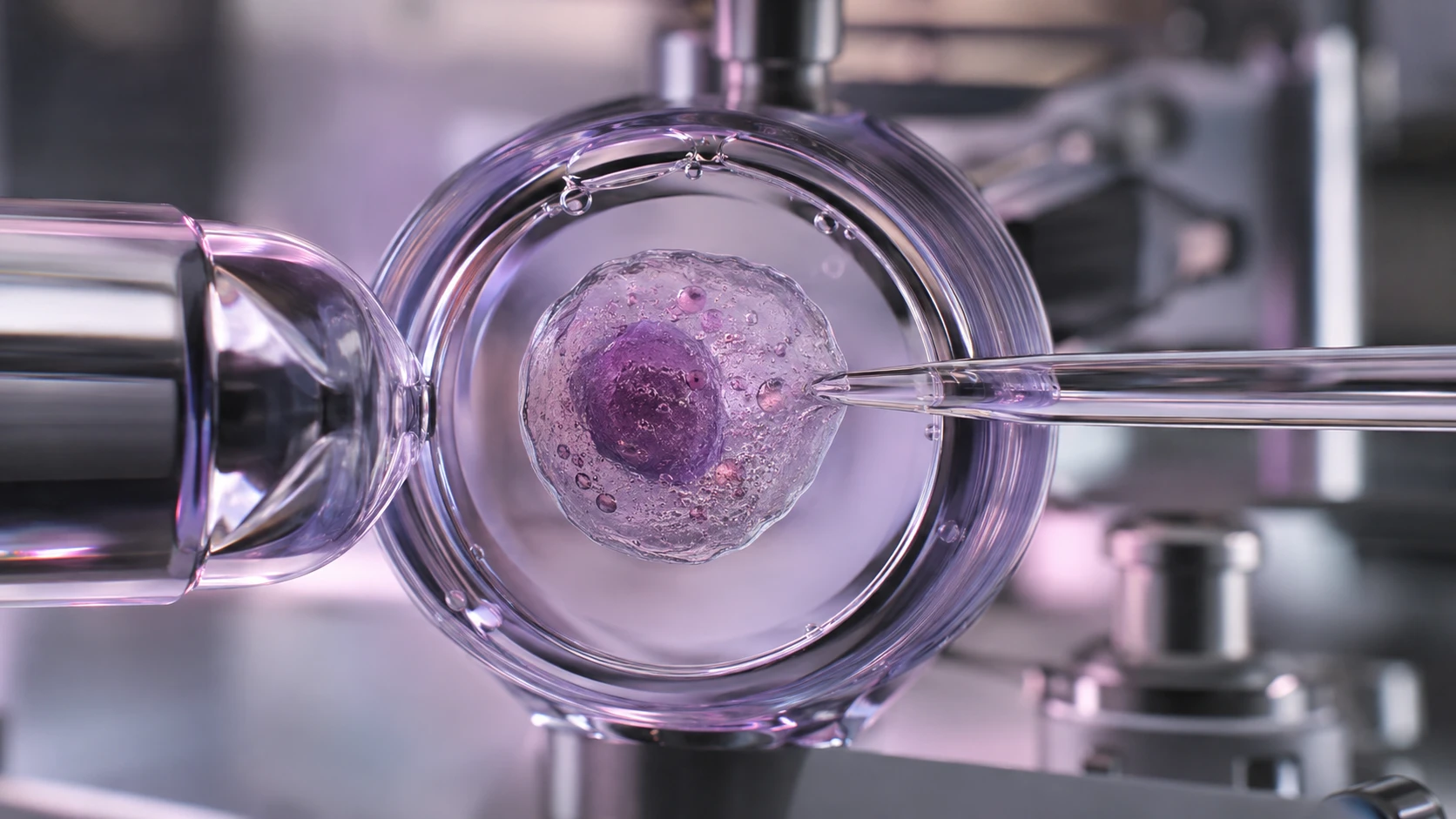
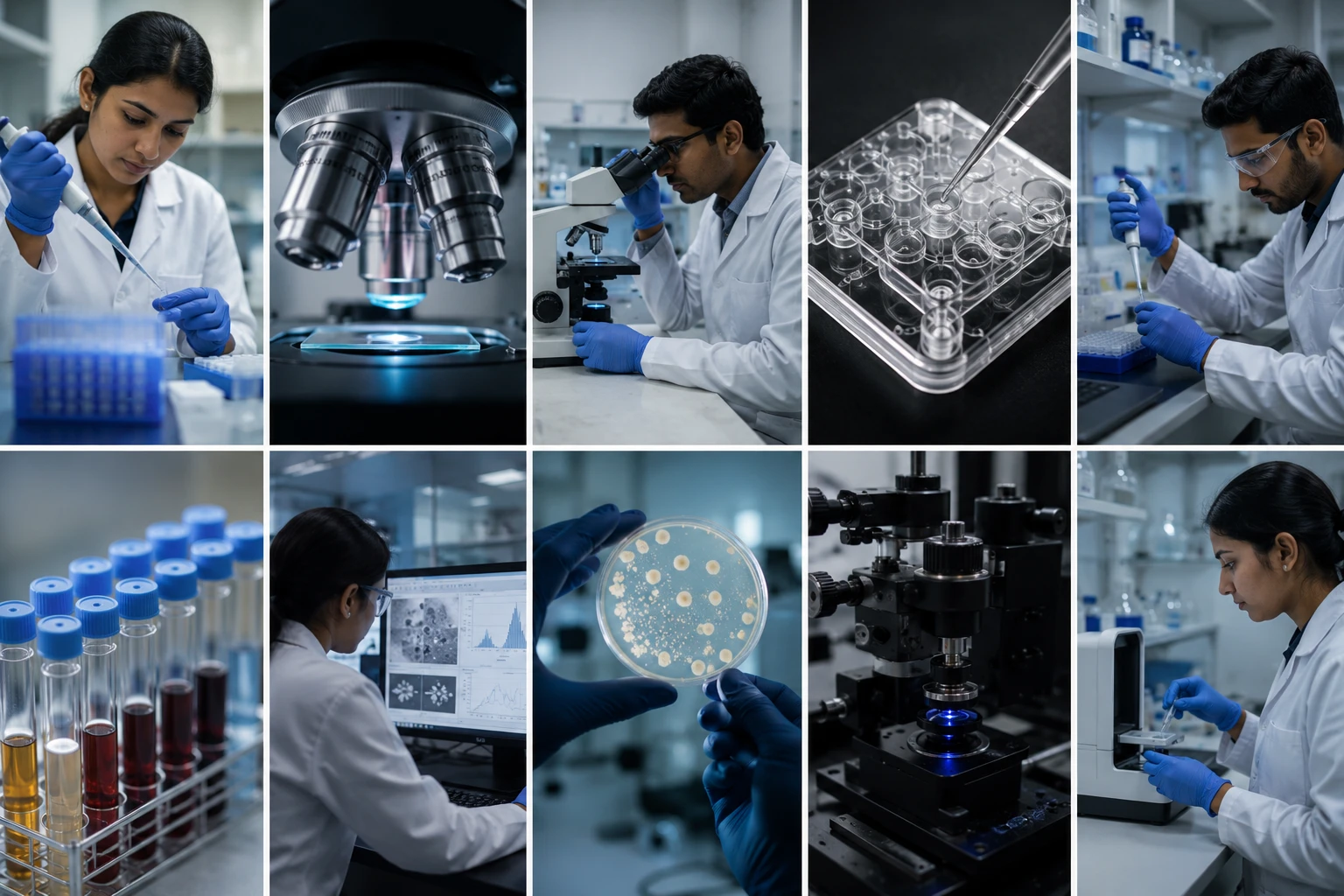
A DPIIT-recognised deep-tech venture engineering reagent-free, AI-native diagnostic platforms for the four billion people centralised healthcare was never designed to reach. In research, prototype, and engineering development today.
Why we exist
The diagnostic infrastructure that clinical medicine depends on was designed for reliable power, trained lab staff, reagent cold chains, and institutional budgets. In India alone, roughly 800 million people live outside the reach of that infrastructure. Globally, the Lancet Commission on Diagnostics estimates that 47% of the world's population has little or no access to even basic diagnostic testing — and at the primary-care level in low- and lower-middle-income countries, access drops to approximately 19%.
The problem is not that these communities lack resources for health. The problem is that the architecture of the test itself demands resources they will never have. BIQADX starts from a different set of first principles: no cold chain, no perishable reagents, no specialist operator. If the architecture is right, access follows.
Figures: The Lancet Commission on Diagnostics, 2021.
The reality today
Her child has had a fever for four days. The nearest clinic is 22 kilometres away. The health worker suspects malaria — or typhoid — or a respiratory infection. There is no test to confirm. The child is given antibiotics, just in case. If they don't work, she will make the journey again.
He has been coughing for three weeks. He visits a pharmacy, then a private clinic, then another. By the time tuberculosis is confirmed — after a median of 26 to 35 days and three or more visits — he has lost wages his family cannot absorb, and others have been exposed.
WHO recommends eight diagnostic tests across four antenatal visits. Her sub-centre can perform two of them, sometimes. The rest require a district hospital she may not reach. Conditions that could be caught early — gestational diabetes, hepatitis B, anaemia — go undetected until delivery, when the cost of a missed answer is highest.
These are not edge cases. They are the median experience for billions of people. This is what BIQADX is designed to change.
Scenarios constructed from: Lancet Commission on Diagnostics 2021; PLOS Medicine TB patient-journey studies, India; WHO antenatal care guidelines.
What we build
A fully integrated diagnostic platform — hardware, intelligence, and chemistry, designed as one.
The single largest barrier to decentralised testing is the reagent: perishable, cold-chain dependent, expensive per test, and unavailable in the places that need testing most. Our platform is being engineered to read clinically meaningful signals from a biological sample using physical and computational methods — reducing or eliminating the need for the conventional chemistry that makes every answer expensive and every supply chain fragile. This is our hardest research challenge and our most important one.
A single sample can carry many kinds of information — optical, electrochemical, thermal, mechanical. Conventional instruments read one signal at a time, from one sample, with one method. Our platform is being designed to read many signals simultaneously from one small sample, so a single collection moment generates a richer, more complete clinical picture. The goal is that a patient gives one drop, and the platform returns many answers.
Intelligence is not a software layer added on top of a hardware product. It is woven into the architecture from the start — interpreting multi-modal signals, flagging quality concerns, gating results that do not meet confidence thresholds, and packaging outputs into structured clinical formats. The inference runs locally on the device, offline-first, so the answer does not depend on a network connection the clinic may not have.
Every design decision begins with the hardest deployment scenario: a community health centre with intermittent power, no trained lab technician, ambient temperatures above 40°C, and a patient who has already travelled further than they should have had to. If the platform works there, it works everywhere. We design for the constraint, not the ideal.
Healthcare generates millions of tonnes of waste each year. Most diagnostic consumables — tubes, cartridges, containers, gloves — are single-use plastics that will outlast the patients they served by centuries. Our EcoLabware program is developing biodegradable, compostable alternatives anchored by patent application No. 202531060831, filed and under examination. Sustainability is a design constraint from the first sketch, not a CSR report written after the product ships.
How it works
A single drop of blood from a fingerprick, a breath into a sensor, a moment on the wrist. No venous draw requiring a phlebotomist. No sample preparation requiring a trained technician. No reagent kit requiring a cold chain. The collection is designed to be so simple that the person already closest to the patient can do it confidently.
The platform reads the sample across multiple sensing modalities simultaneously — optical, electrochemical, and more — and the on-device intelligence interprets those signals in real time. Quality checks run automatically, so any signal outside confidence thresholds is flagged before it reaches a clinician.
A clear, structured, quality-verified answer — not a raw number, but a clinically contextualised result — delivered in minutes. Ready to guide the very next decision in someone's care: treat, refer, monitor, or reassure.
Evidence maturity
BIQADX is deliberately explicit about stage. The roadmap below separates what exists today from the evidence milestones required before clinical deployment.
Research, prototype, and engineering development. No product is clinically validated, regulatory cleared, or commercially available.
Clinical need, architecture thesis, and design constraints defined.
Core invention directions captured through applications under examination.
Physical systems and sealed carriers iterated through engineering builds.
Planned bench evidence against reference methods and performance targets.
Future human-subject studies under approved protocols and comparators.
Future submissions, quality-system evidence, and deployment governance.
The portfolio
Diagnostics is not an accessory to medicine. It is the foundation on which every decision stands.
The mission
We build for the places diagnostics has never reached — because access to an answer shouldn't depend on where you were born.
The Lancet Commission on Diagnostics, 2021; GRAM / The Lancet, 2022.
From the journal
Founder note
We are building this slowly because the science matters. The goal is not to look finished early. The goal is to earn the evidence, build the architecture correctly, and make diagnostics trustworthy in the places where trust has been missing the longest.
Honest by design
A DPIIT-recognised deep-tech startup registered in Bihar and New Delhi, India. A team of founders building diagnostic technology from first principles. Holders of multiple Indian patent applications, including lead application No. 202531060831, filed and under examination at the Indian Patent Office. Producers of engineering blueprints, prototypes, and extensive scientific and technical documentation. Mission-driven, IP-anchored, and early-stage by choice.
We do not have clinically validated products. We do not have regulatory approvals. We do not have commercial revenue. We have not conducted human-subject clinical trials. Every product on this site is at a research, concept, prototype, or engineering-development stage. We show our stage on every page because honesty at this phase earns the trust that matters at the next one.
Choose your path
Review the thesis, stage, IP posture, and diligence pathway for mission-aligned capital.
Investor brief →Understand how decentralised diagnostics could support frontline access, surveillance, and last-mile programs.
Impact pathway →Explore the evidence architecture, validation roadmap, and future collaboration areas.
Evidence roadmap →Join a small deep-tech team building across physics, biology, engineering, materials, and AI.
Open roles →